Preparing Your Roof for the Rainy Season
Roof preparation for the rainy season in Whittier CA starts in October. Here is the inspection checklist, the fixes that matter, and what 2026 pricing looks like.
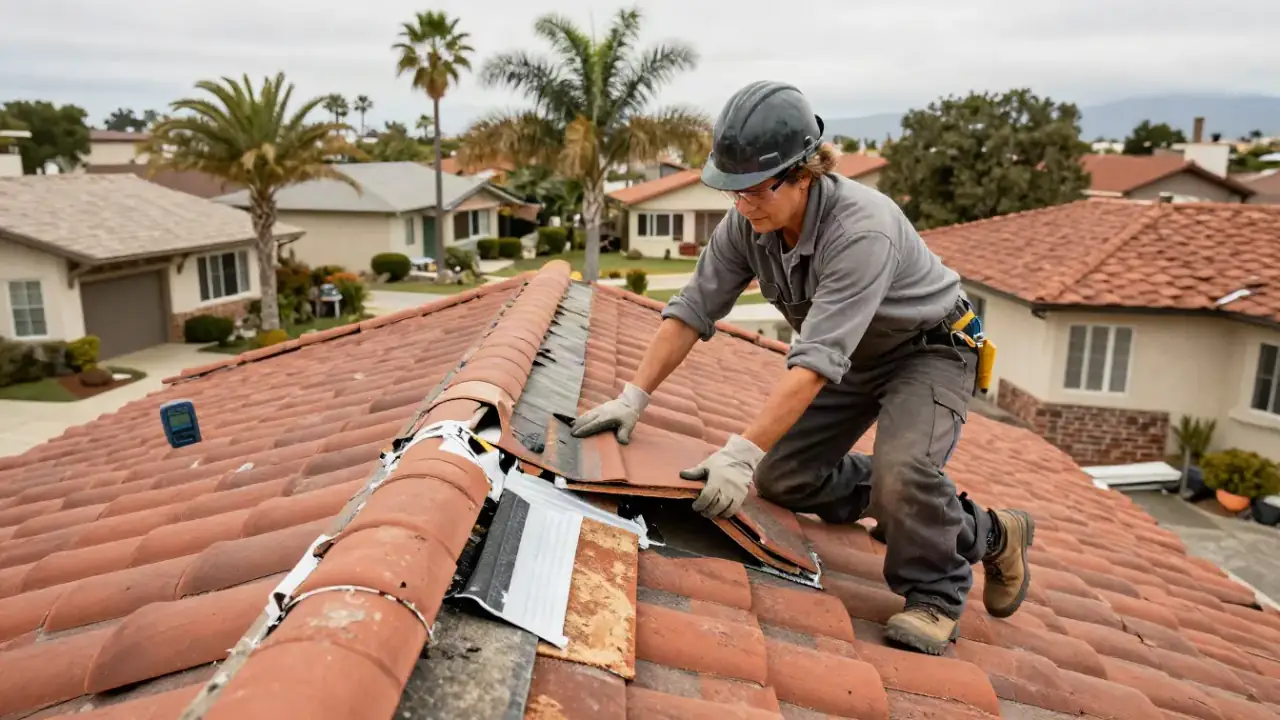
Roof preparation for the rainy season in Whittier CA means walking the roof in October, sealing every penetration and flashing joint before the first storm, and clearing the drainage path so water never sits on your deck. Do those three things and you avoid the January scramble that follows a two-inch rain event. Skip them and you join the dozens of Whittier homeowners who call us every winter with a brown ring spreading across a bedroom ceiling.
We have repaired roofs across Whittier for years, from the 1920s bungalows near the college to the tile roofs up in Friendly Hills, and the pattern never changes. The leaks that cost the most are the ones that were visible in October and ignored. This post covers the timing, the specific components we check, the mistakes that turn a $400 repair into a $4,000 one, and what 2026 pricing looks like for each fix.
Why October Is the Deadline in Whittier
Whittier gets roughly 14 to 16 inches of rain a year, and almost all of it falls between November and March. October is the last dry month wide enough to schedule work, order materials, and let sealants cure before the first real storm.
That dry window matters more than people think. Most roof sealants and flashing adhesives need 24 to 72 hours above 50°F to cure properly. Apply them the morning of a storm and you have done nothing but move the leak six inches sideways.
There is a second reason to move in October. Roofing crews in Whittier fill up fast once the first rain hits. A job that takes us half a day in mid-October can take two weeks to schedule in December, and by then you are paying emergency rates for a repair that was routine a month earlier.
If you want a single rule: finish your roof work by the end of October, and never start a sealant project within 48 hours of a forecast storm.
How do I prepare my roof for the rainy season in Whittier CA?
You prepare a Whittier roof for rain by inspecting it from the ground and on the deck, re-sealing every flashing and penetration, clearing gutters and downspouts, and repairing any damaged shingle, tile, or flat-roof membrane before the first storm. That is the whole job in one sentence. The rest of this section is how we actually do it.
Start on the ground with binoculars. You are looking for lifted or missing shingles, cracked or slipped tiles, rust streaks below flashing, and dark patches on the fascia. Anything you can see from the driveway is worth a closer look up top.
Then get on the roof, or have someone who does this daily get on it. Work from a stable ladder with a helper, wear soft-soled shoes, and stay off wet tile entirely. Tile roofs in Whittier are steep and glazed, and a fall from a two-story Whittier roof is not a minor injury.
Here is the sequence we follow on a standard preparation visit:
- Photograph the whole roof from four angles so you have a before-and-after record.
- Check every flashing joint, pipe boot, vent, and skylight for cracked sealant or rust.
- Clear gutters, downspouts, and any debris dams behind chimneys.
- Re-seal or replace anything that failed, and mark anything that will fail within a year.
- Water-test the repaired areas before you leave the property.
If you would rather hand the whole list to someone who does it every week, our team handles Roof Leak Repair Whittier CA as a single visit, inspection through water test.
When should I inspect my roof before rain in Whittier California?
Inspect your roof in Whittier in early October, then again in late January after the first heavy storms have passed. Two inspections a year catch almost everything before it becomes a ceiling stain.
The October inspection is the important one. Roofs fail quietly in the dry months. A cracked pipe boot or a lifted shingle edge does nothing visible from June through September, then leaks the first time water runs sideways across it for six hours.
The January inspection is a damage check. Santa Ana winds in the fall and the first big storms of winter both move debris and stress fasteners. A 20-minute look after a two-inch rain event tells you whether the October work held.
If you have never had the roof looked at, or you bought the house in the last two years and do not know its history, book the October inspection first. A roof inspection before rain near me is the cheapest insurance you can buy on a Whittier house, and it usually costs less than a single interior drywall repair.
The Six Failure Points We Check on Every Whittier Roof
Every Whittier roof we inspect gets the same six-point review, because these are the components that fail first in our climate. Fix them in October and you skip most of the winter calls.
1. Flashing and wall joints
Flashing is the metal that seals the joints where your roof meets a wall, a chimney, or another roof plane. It is the number one source of leaks we find in Whittier. Sealant on flashing dries out and cracks in two to four years under our UV load, and once it cracks, water goes straight into the wall cavity.
If your flashing is more than a decade old or the sealant is visibly checked, this is the repair to prioritize. Our Flashing Repair Whittier CA work covers re-sealing, re-lapping, and replacing rusted step flashing.
2. Pipe boots and vents
Every plumbing vent and exhaust fan that exits your roof passes through a rubber boot. That rubber cooks in the summer sun and cracks within 10 to 15 years. It is a $150 to $350 fix in 2026 and a $1,200 ceiling repair if you wait.
3. Roof valleys
Valleys are where two roof planes meet, and they carry more water than any other part of the roof. Debris collects there, and on older Whittier homes the valley metal is often rusted through. If you see rust or exposed fasteners in the valley, get it addressed before the rain.
4. Skylights
Skylights leak at the curb flashing, not through the glass. The sealant around the frame fails first, then the glass gasket. A skylight that drips in January was almost always visible in October.
5. Chimneys
Chimney leaks come from three places: the counter-flashing at the roof line, the brick itself if the mortar is cracked, and the crown at the top. We see all three on Whittier's older masonry chimneys.
6. The roof surface itself
Shingles, tile, and flat membrane each fail differently. Lifted or missing shingle tabs, cracked or slipped tiles, and blistered or ponding flat roofs all need attention before the rain. If your home has a flat or low-slope section over a garage or addition, that is where we find the most winter leaks in Whittier.
Gutters, Drainage, and the Ground Around Your House
Half the roof leaks we get called about in Whittier are not roof leaks at all. They are drainage failures that push water back under the roof edge or into the foundation.
Clear every gutter and downspout in October. One season of Whittier's eucalyptus and sycamore debris is enough to dam a downspout, and a dammed gutter sends water sideways under the fascia and into the wall.
Then look at the ground. Downspouts should discharge at least 4 to 6 feet from the foundation. If your downspouts dump right at the slab, water pools against the house and finds its way in through the stem wall, not the roof.
Check the slope too. Water should run away from the house at roughly a 6-inch drop over the first 10 feet. If your yard slopes back toward the foundation, no amount of roof work will keep the lower level dry.
One more item: trim any tree limb that hangs within 3 feet of the roof. Branches scrape shingles, drop debris into valleys, and give squirrels a bridge onto your roof. Squirrel damage to pipe boots and vent screens is a real winter leak source in Whittier's older neighborhoods.
What to Watch Out For
Most rainy-season roof damage we see in Whittier comes from a short list of avoidable mistakes. Here are the ones that cost homeowners the most.
- Sealing over a wet or dirty surface. Sealant will not bond to dust, moss, or moisture. It peels within one season and hides the real problem.
- Using roof cement as a permanent fix. Mastic is a patch, not a repair. It buys you a few months and makes the eventual repair harder to diagnose.
- Walking a wet tile roof. Tile is slick when wet and cracks underfoot. Wait for dry conditions or call someone who does this daily.
- Ignoring a small interior stain. A quarter-sized ceiling stain in November is a $300 repair. By February it is a $1,500 drywall, insulation, and paint job.
- Pressure-washing shingles. It strips the granules that protect the asphalt and shortens the roof's life by years.
- Waiting for the first storm to call. Emergency pricing in December is real, and crews are booked out. October work costs less and gets done faster.
If you already have a stain on the ceiling, do not wait for the roof to be repaired before you investigate it. Water travels along framing, so the stain is often 6 to 10 feet from the actual entry point. Our Ceiling Water Stain and Moisture Investigation Whittier CA traces the moisture back to the source before we quote any repair.
When to Call a Professional
Call a professional when you cannot safely get on the roof, when the leak appears in more than one room, or when you have already patched the same spot twice and it still drips. Those three situations almost always mean the visible problem is not the real one.
We also get called when a homeowner has a roof over 15 years old and no idea what shape it is in. At that age, a proper inspection tells you whether you are looking at a repair year or a replacement year, and that changes how you spend your money.
Whittier Roof Leak Repair handles preparation visits, leak tracing, and repairs across the city, from Uptown's older bungalows to the tile roofs in Friendly Hills. We find the leak, fix it, and water-test the repair before we leave the property. If you are in one of the neighborhoods where we work most, you can start with the page for Roof Leak Repair in Uptown Whittier or the one for Roof Leak Repair in Friendly Hills and we will take it from there.
Frequently Asked Questions
How do I prepare my roof for the rainy season in Whittier CA?
Inspect the roof in early October, re-seal or replace every flashing joint and pipe boot, clear gutters and downspouts, and repair any damaged shingles, tiles, or flat membrane before the first storm. Budget 2 to 4 hours for the inspection and 1 to 3 days for the repairs, depending on what we find.
When should I inspect my roof before rain in Whittier California?
Early October, then again in late January after the first heavy storms. October gives sealants 24 to 72 hours to cure before rain, and January catches wind or debris damage from the first half of winter. Two inspections a year is the right cadence for Whittier's climate.
What roof maintenance is needed before rainy season in Whittier?
Re-seal flashing and pipe boots, clear gutters and downspouts, replace cracked or slipped tiles and lifted shingles, check skylight and chimney flashing, and confirm downspouts discharge 4 to 6 feet from the foundation. On flat or low-slope sections, check for ponding and blistered membrane.
Who can inspect my roof near me in Whittier CA?
Whittier Roof Leak Repair inspects roofs across Whittier and the surrounding areas, including Uptown, Friendly Hills, East Whittier, and North Whittier. We photograph what we find, explain what needs fixing now versus what can wait, and quote the repair before we start.
How much does roof preparation cost in Whittier in 2026?
Typical 2026 pricing in this area runs $150 to $350 per pipe boot or vent, $250 to $600 for flashing re-sealing, $300 to $800 for valley or skylight repairs, and $400 to $1,200 for flat-roof patching. A full inspection with a written report usually runs $150 to $300 and is credited toward the repair.
Get Help With Roof Leak Repair in Whittier
October is the month that decides whether your winter is quiet or expensive. One visit now covers the inspection, the flashing and penetration work, the drainage check, and the water test that proves it holds.
Call Whittier Roof Leak Repair at (562) 443-3829 to schedule your rainy-season roof preparation before the first storm hits.